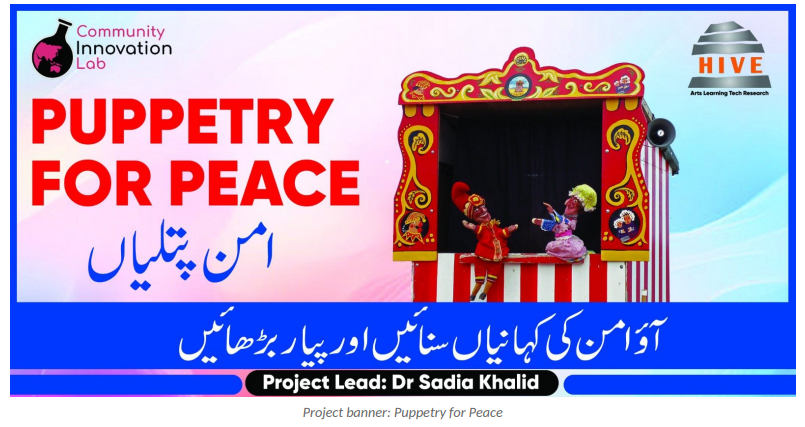
Puppetry for Peace
Reviving Putli Tamasha as a tool for peace, inclusion and civic responsibility in the Walled City of Lahore
| Project code | CIL-041 |
|---|---|
| Project lead | Dr. Sadia Khalid |
| Duration | 30 November 2025 to 20 February 2026 (about 3 months) |
| Partners | Community Innovation Lab (CIL 2.0) and Hive Pakistan; on-ground support from the Walled City of Lahore Authority (WCLA) |
| Location | Walled City of Lahore: Delhi Gate, Zaki Gate, Bhati Gate, Lohari Gate and Mori Gate |
Project Overview
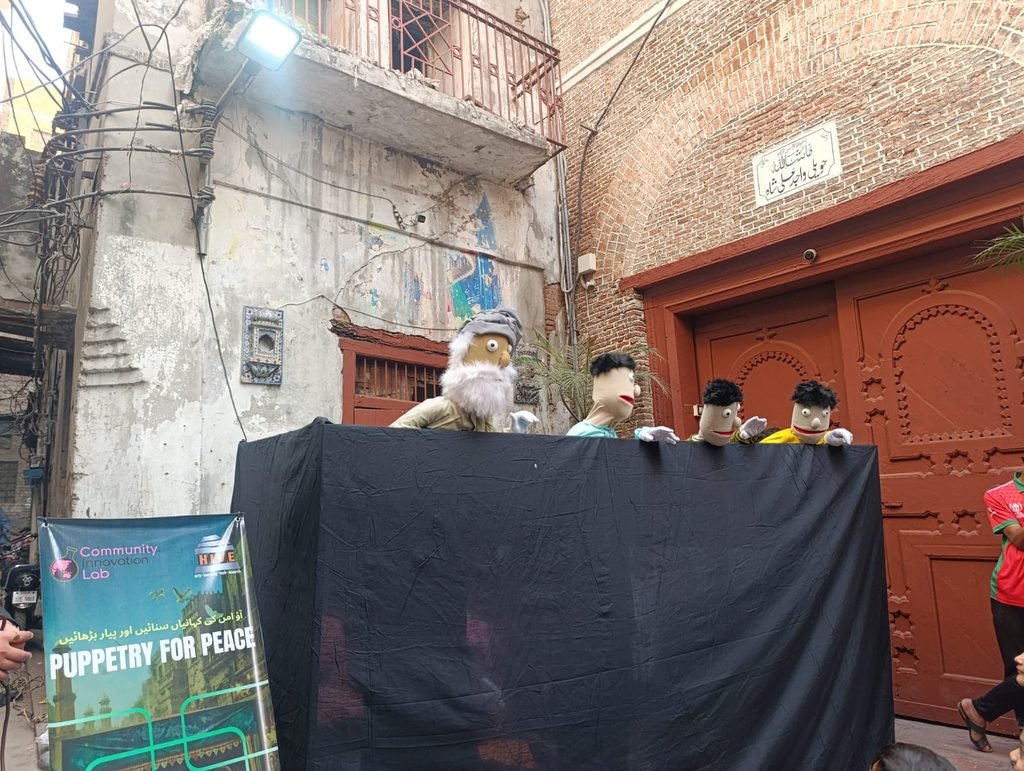
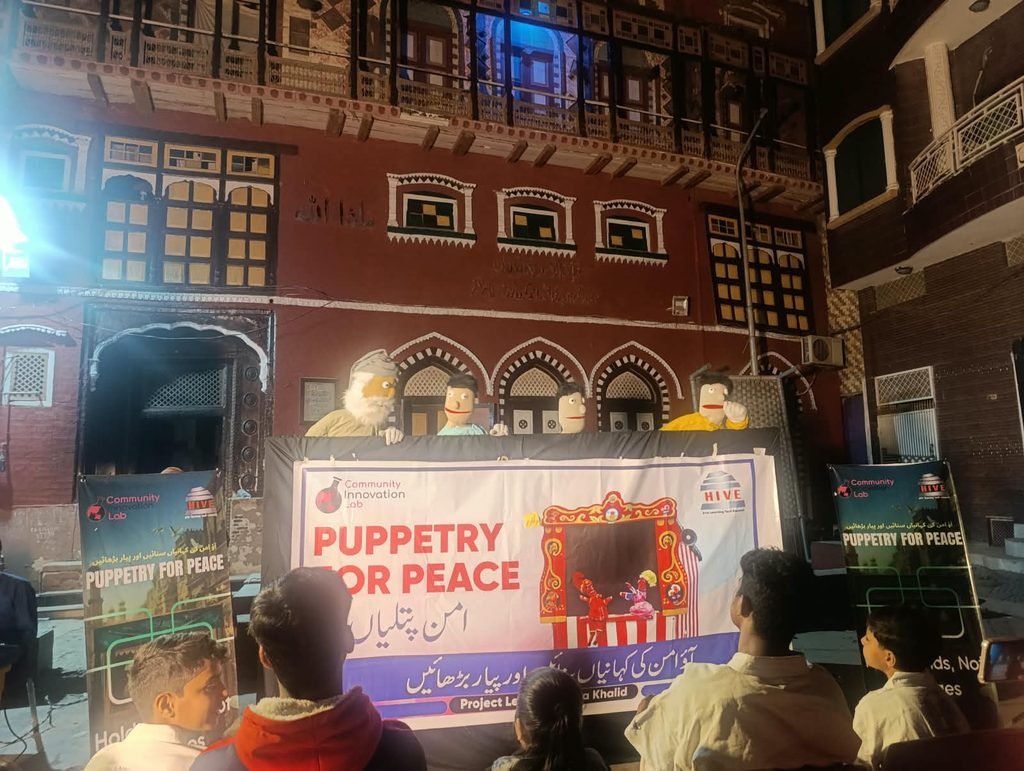
Puppetry for Peace is a youth-led project that brought Putli Tamasha (puppet theatre) back to the streets of Lahore’s Old City. Puppetry was once a loved part of childhood in Pakistan, but it has almost disappeared. A team of university students, guided by master puppeteers and storytellers, wrote an original peace story, made six puppets by hand, recorded the drama in a studio and performed it in five historic gate communities.
The project set out to do two things together: revive a fading cultural art form, and use it to spread messages of peace, inclusion, women’s empowerment and environmental responsibility among children and families who rarely have access to such experiences.
Why the project was started
The idea grew from the project lead’s own childhood memories of the puppet festivals organised by the Rafi Peer Theatre Group, and from watching a beloved tradition fade. Lahore once hosted puppet troupes from over 30 countries at the World Puppet Festival of 1992. Puppetry declined after the 2008 attack on the Rafi Peer Cultural Centre, and later as mobile phones and YouTube drew children away from live shows. Many skilled glove and rod puppet makers have left the profession because of financial instability.
Background & Problem Statement
The project responded to two connected problems:
- A fading art form. Live puppet shows have become rare. Skilled artisans and trainers are few, materials are expensive, and young people have little chance to learn the craft.
- Social challenges in communities. Religious and racial discrimination, anger and aggression among youth, unequal access to education for girls, weak civic sense, and low awareness of hygiene and climate responsibility.
- Limited access to creative experiences. Children in many Old City neighbourhoods had never seen a live puppet show, and told the team that nothing like it had happened in their community before.
Puppetry was chosen because it is familiar, joyful and non-threatening. It allows sensitive topics such as discrimination and girls’ education to be discussed with children and elders alike, without preaching.
Objectives
| # | Objective | How it was addressed |
|---|---|---|
| 1 | Promote peace, tolerance and acceptance of diversity | An original story with characters from different backgrounds; messages on peace, equal rights of all faiths and unity over conflict |
| 2 | Train young people in puppetry and storytelling | Puppetry workshop for students; guided puppet-making, script writing, voice-over and live puppeteering with master trainers |
| 3 | Challenge stereotypes and discrimination | Characters Amar (a marginalised Hindu boy) and Roshni (a girl denied education) shown with dignity and support |
| 4 | Raise awareness on civic sense and climate responsibility | Live interaction with the puppet Roshni and children’s pledges on cleanliness, water, plastic and energy |
| 5 | Engage communities in their own heritage | Five street performances in the Walled City, with a short history of each gate shared with the audience |
Target Participants & Beneficiaries
| Group | Who they are |
|---|---|
| Direct participants | University students who took part in the puppetry workshop and the student core team, who produced and performed the show |
| Direct beneficiaries | Approximately 500 children and community members per show who attended the performances |
| Indirect beneficiaries | Approximately 1,000 people reached through families, neighbours, onlookers and word of mouth |
| Social media audience | 5,000 people engaged with the project’s online content |
| Partners and institutions | Community Innovation Lab, Hive Pakistan and WCLA staff, who supported access, security and coordination |
Approach & Methodology
The project combined training, original storytelling and community theatre. Five elements shaped the approach:
- Learning by making. Students learned through hands-on work: sock puppets in the workshop, then full character puppets and costumes.
- Original story. The team wrote its own peace story based on real social issues, with simple dialogues and a magical touch to hold children’s attention.
- Recorded voice, live puppets. As the team was new to performing, the drama was recorded in a studio. Puppeteers then concentrated on movement, timing and expression.
- Interactive street theatre. Each show included live puppet interaction, discussion, pledges and creative activities, not only the story.
- Local partnership. WCLA’s permission, security and on-ground staff helped the team work safely in narrow, crowded streets.
Creative process: from idea to performance
Show format used at every gate
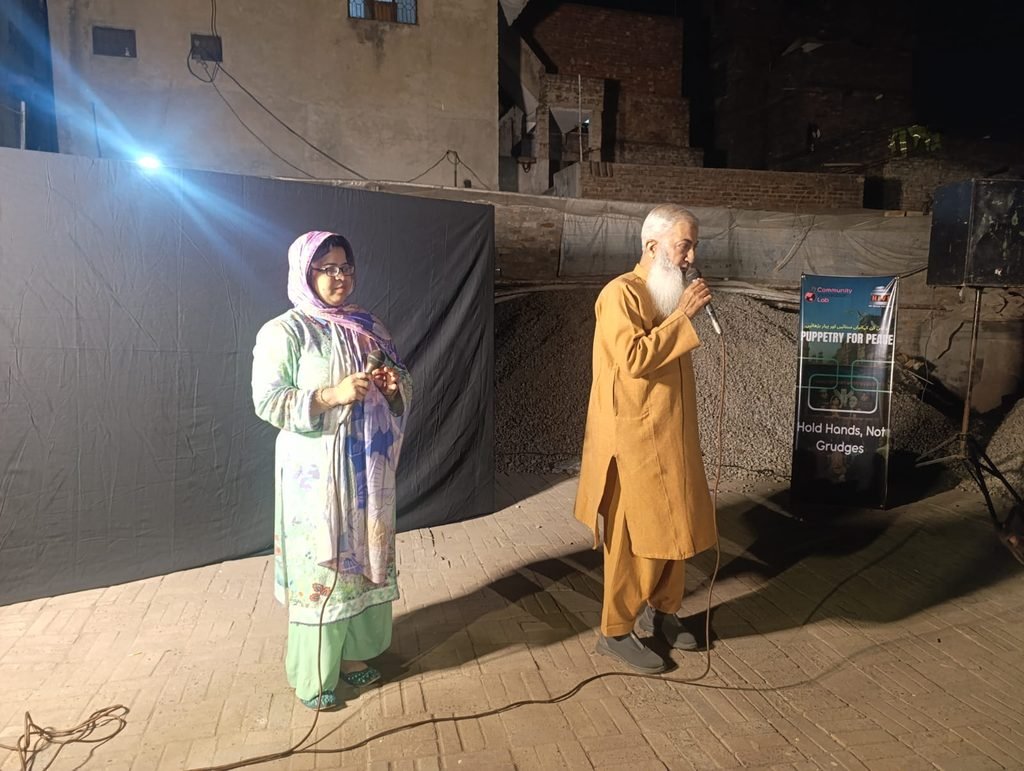
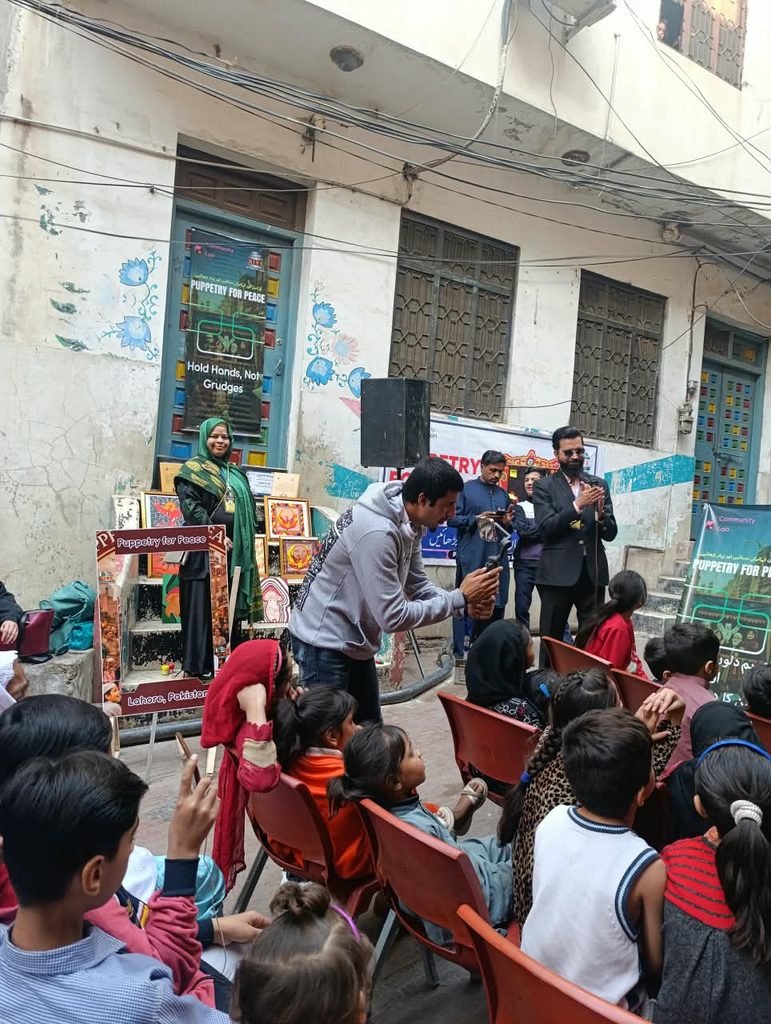
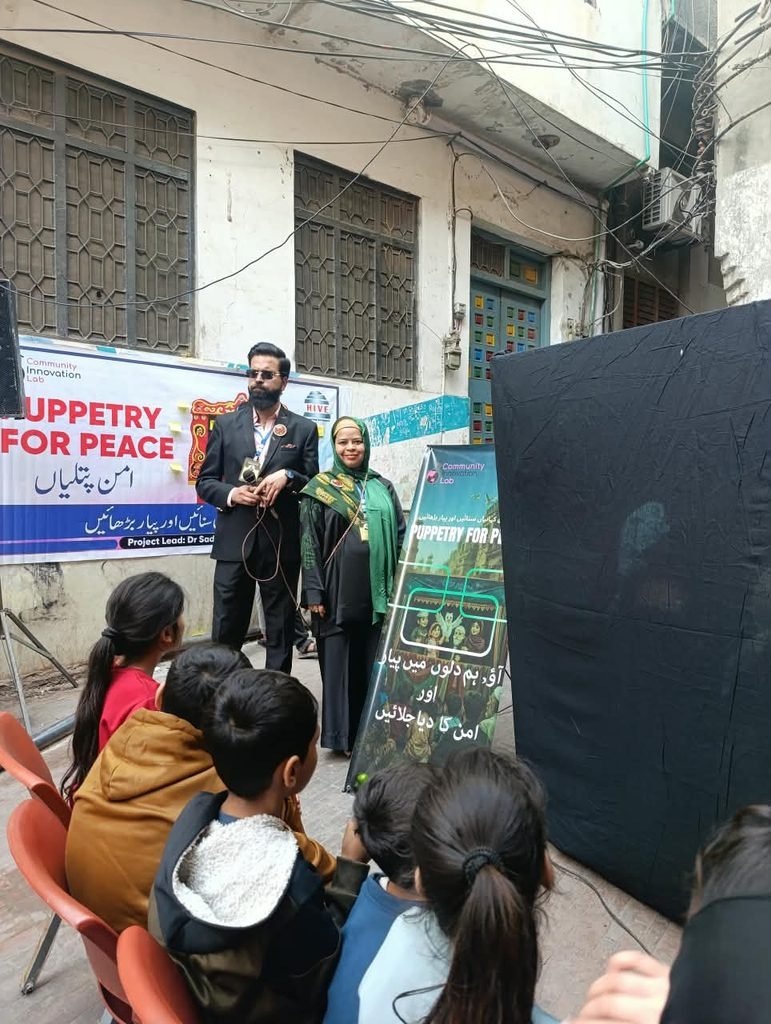
- Introduction of the project and its partners by the project lead
- Live puppet interaction sharing the history of the gate
- Main puppet show of about 7 to 8 minutes
- Discussion: which character did children like, and why
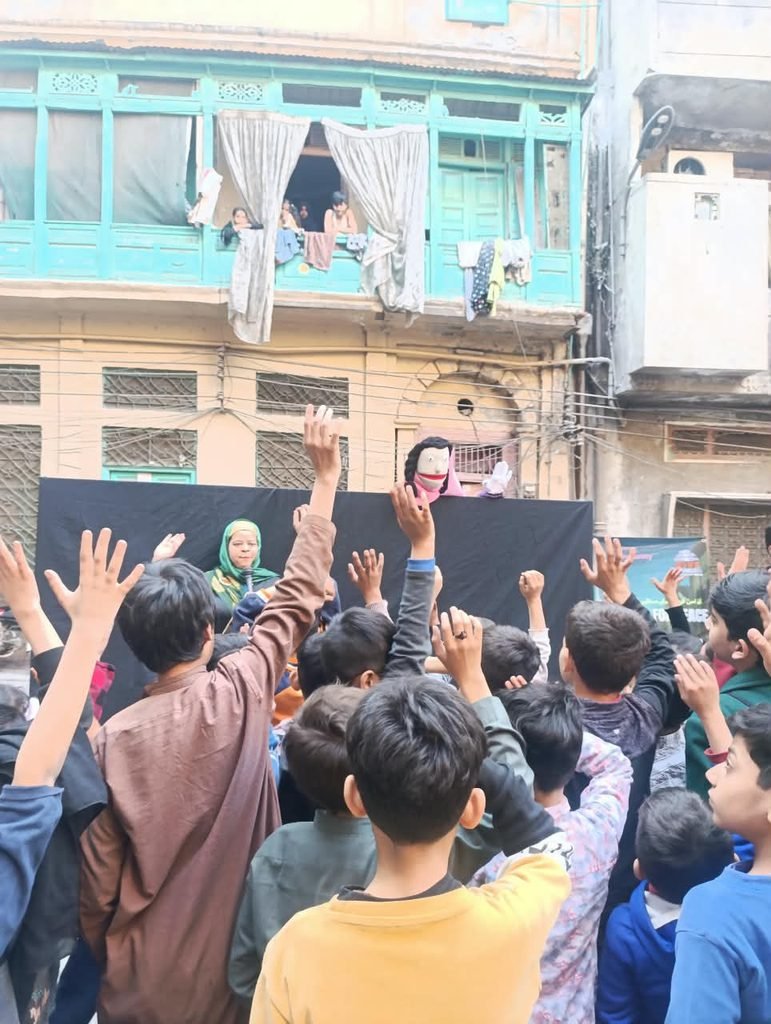
- Roshni’s live message on climate and civic responsibility, with pledges
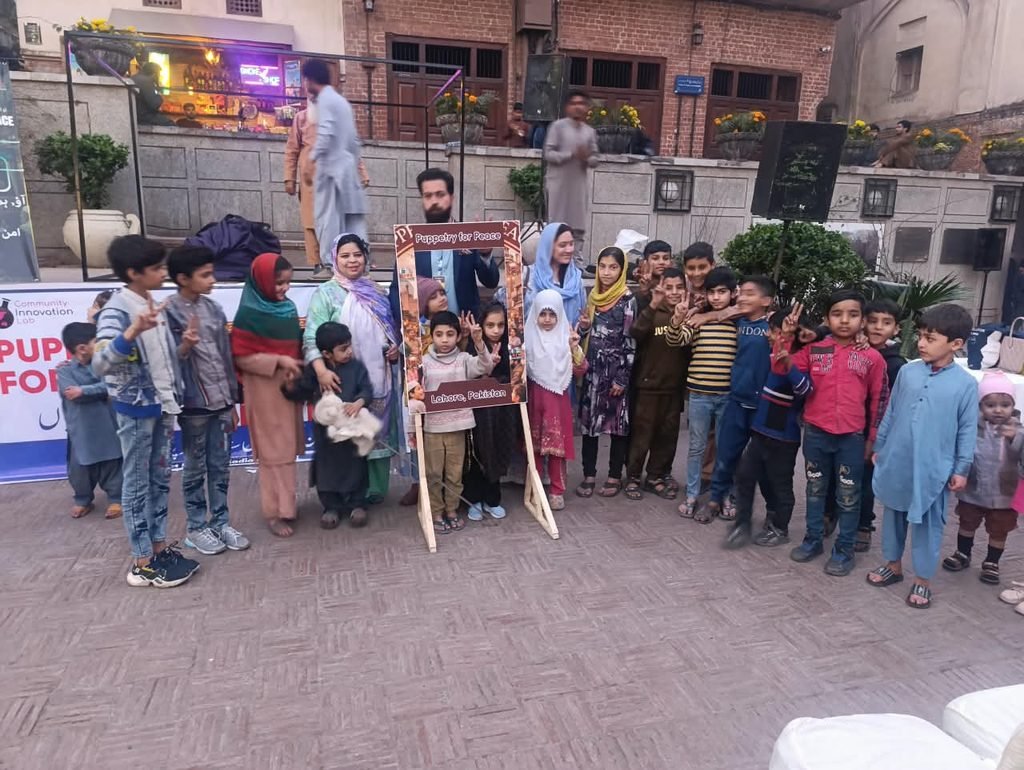
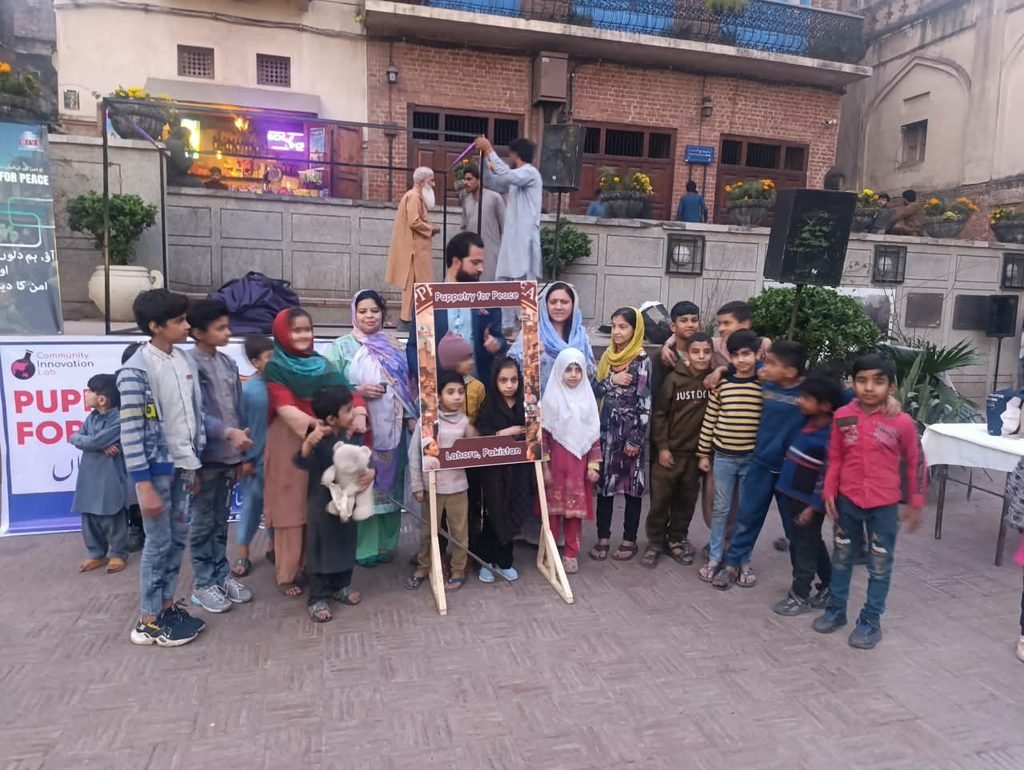
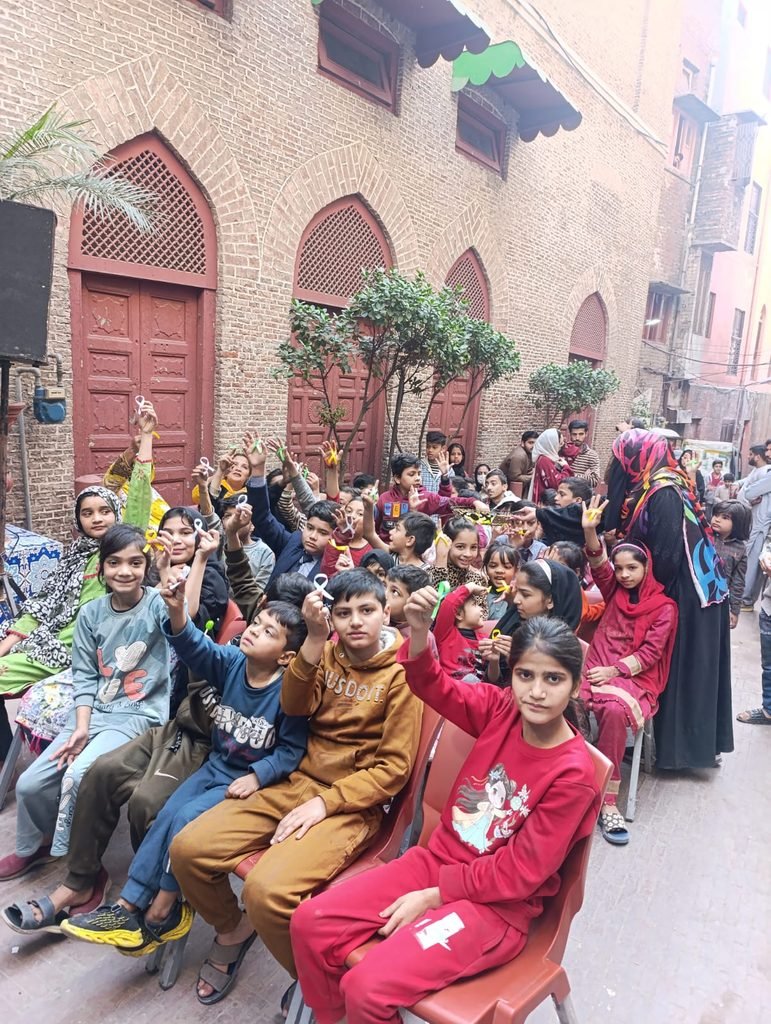
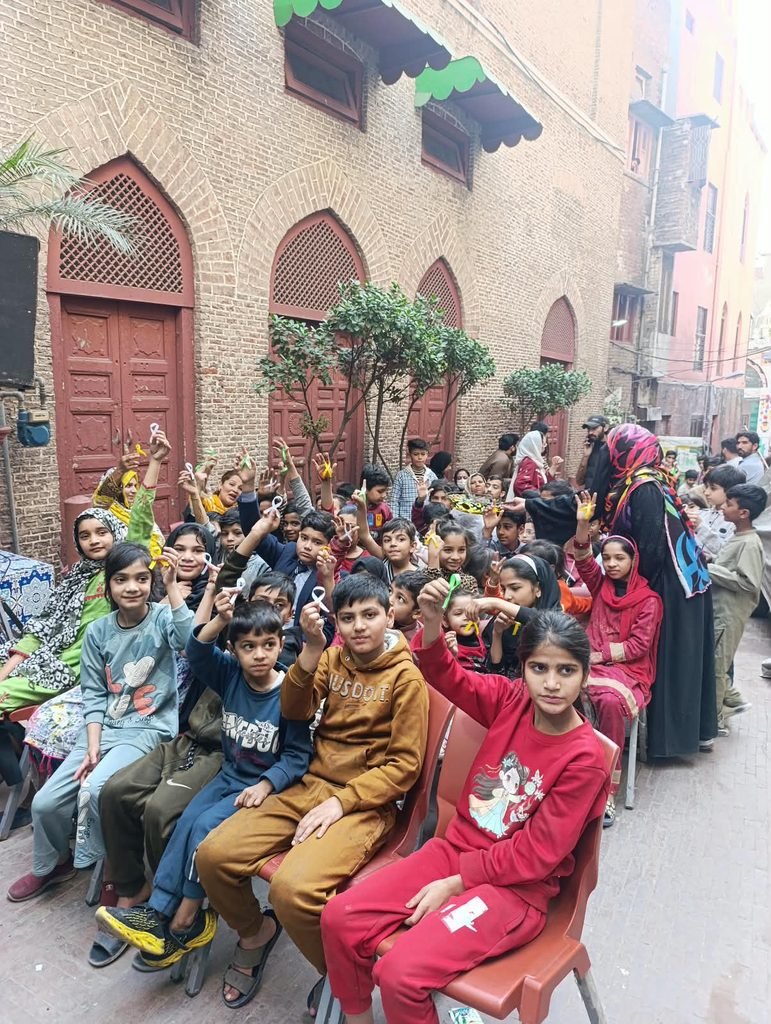
- Art corner, face painting, selfie booth, peace ribbons and feedback collection
Key Project Activities
| Date | Activity |
|---|---|
| 30 Nov 2025 | Project start; search for student team members and trainers |
| Early Dec 2025 | Team of six students from Punjab University formed; trainers and guest trainers identified |
| 15 Dec 2025 | Puppetry workshop for students: sock-puppet making, hand control, one-minute acts on smog, religious discrimination and war vs. peace, and a guest session on Urdu storytelling |
| Dec 2025 – Jan 2026 | Story and script development; Punjabi dialogue added for realism; team feedback session and rehearsal on 11 Jan |
| Jan 2026 | Making of six puppets and costumes by the team, over roughly two and a half to three weeks |
| 24 Jan 2026 | Studio recording of the three-scene drama with narration and background music |
| Jan – Feb 2026 | Meetings with WCLA, official letter and approval; design of branding materials |
| 5 Feb 2026 | Full rehearsal with puppets, props and costumes |
| 14 Feb 2026 | Performances at Delhi Gate (Wazir Khan Mosque courtyard) and Zaki Gate |
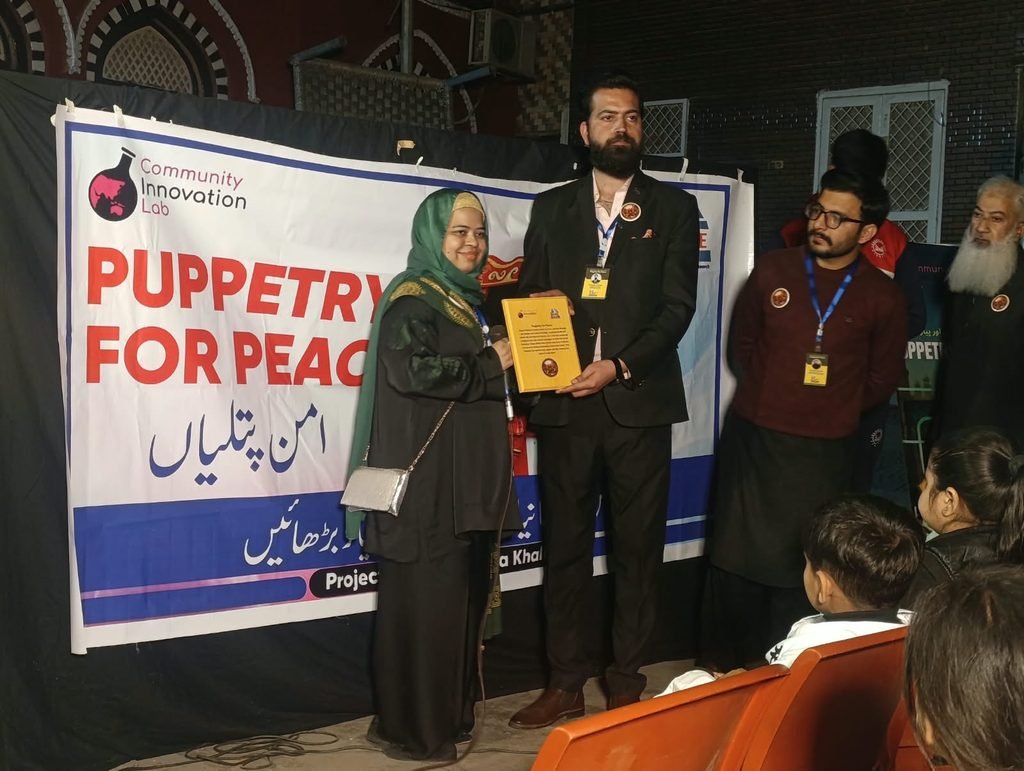
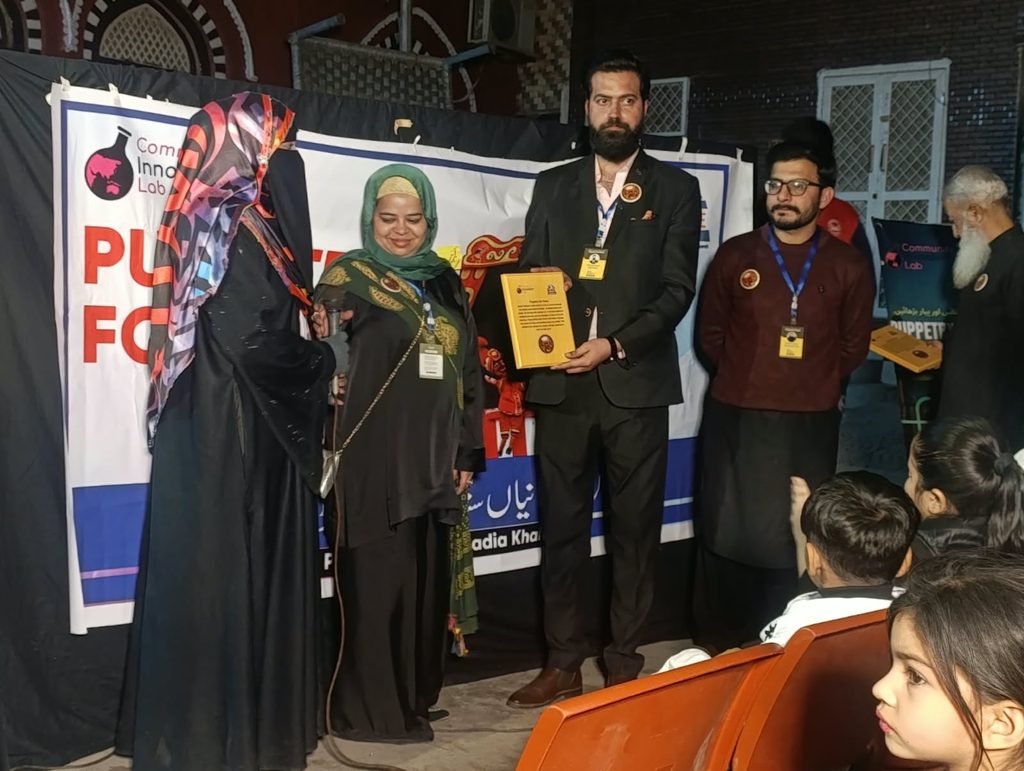
| 15 Feb 2026 | Performances at Bhati Gate, Lohari Gate and Mori Gate, with closing ceremony, shields and certificates |
| 20 Feb 2026 | Project end |
The Story and Its Key Messages
The drama is set in the village of Hasilpur. Sada-e-Aman, a wise peace traveller with magical powers, meets young people caught in their own struggles. The story shows that no one is born bad: people are shaped by their circumstances, and compassion, truth and unity can change them.
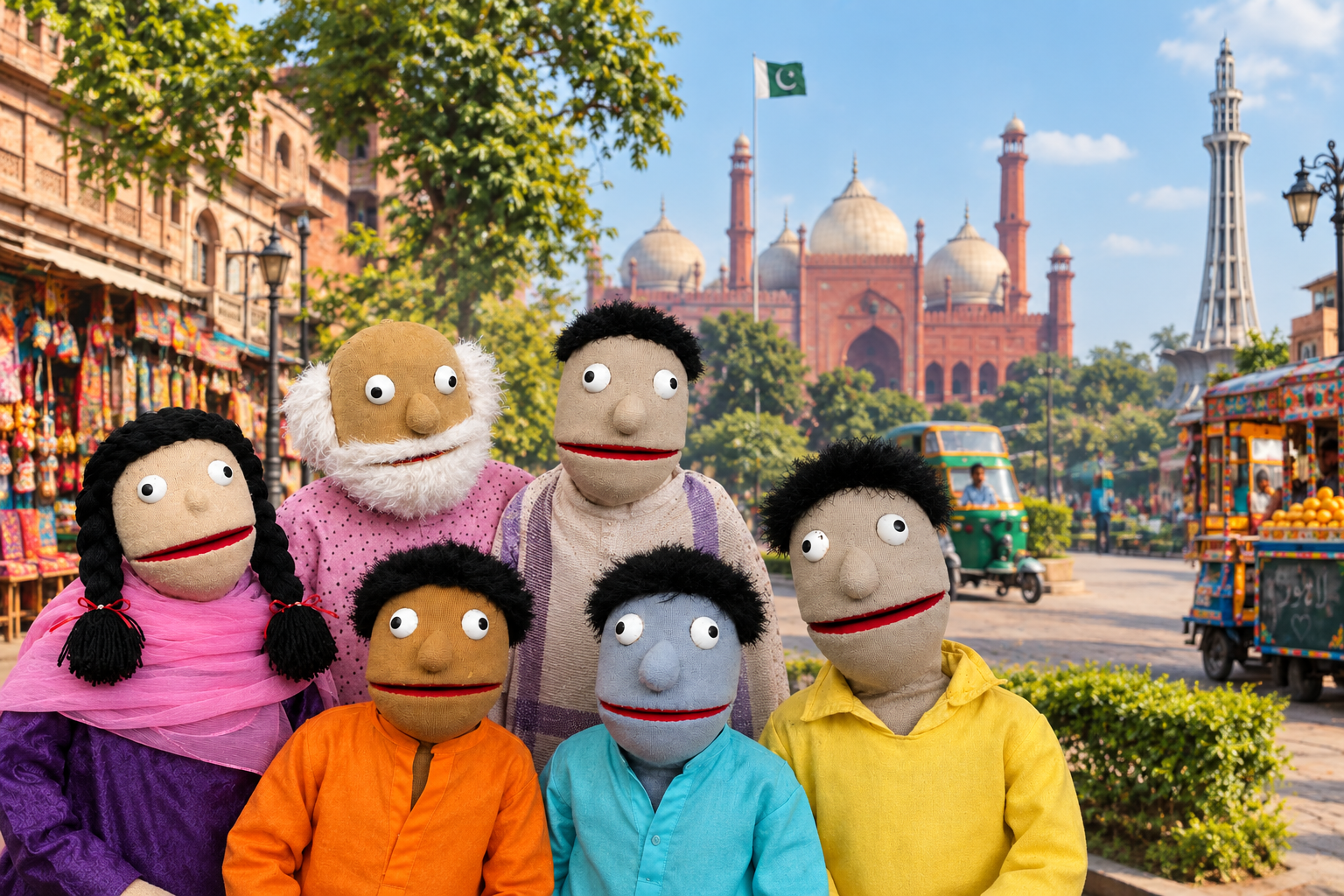
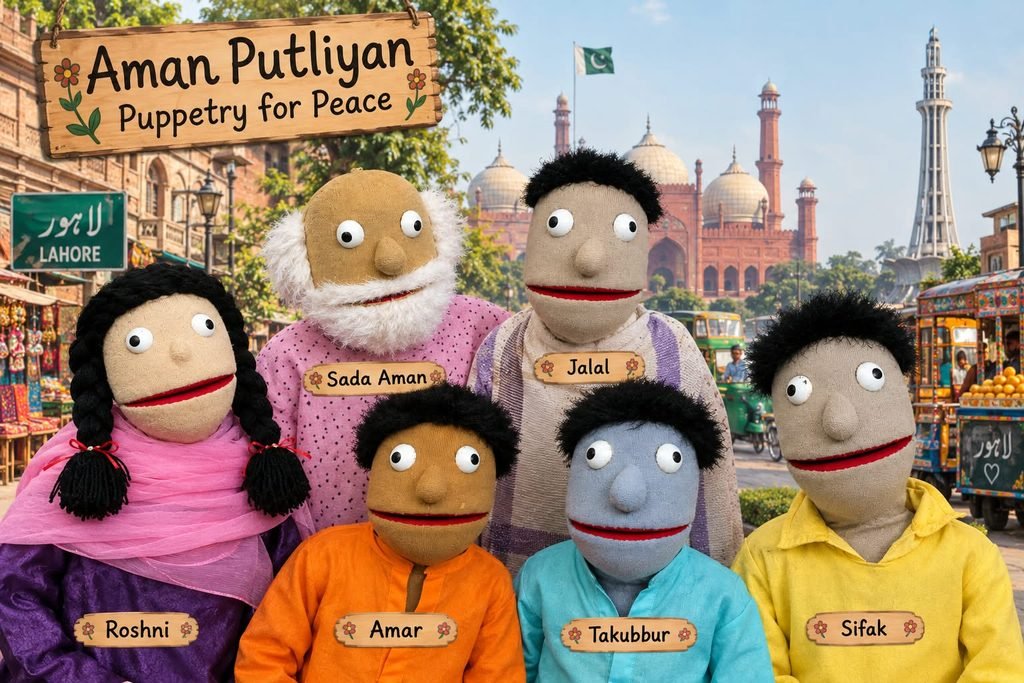
| Character | What the character shows | Puppet design |
|---|---|---|
| Sada-e-Aman | A peace traveller who guides others to truth, unity and harmony | Elderly, wise; white beard and traditional turban |
| Takkabur | Arrogance born of wealth and appearance | Fair-toned, attractive, self-assured look |
| Sifaak | Anger and revenge from family disputes | Regional accent added to his voice |
| Jalal | Aggression as a cry for attention | Regional accent added to his voice |
| Amar | A Hindu boy marginalised for his faith and complexion | Dark-toned boy with a brown mala |
| Roshni | A girl denied education; becomes an “iron lady” and carries the climate and civic message | Long braids and a dupatta |
The three scenes
Dastan-e-Aman (Story of Peace) was developed from a story concept by Dr. Sadia Khalid and Khawaja Danyal, with dialogues written by Khawaja Danyal. The drama is performed in three scenes.
Scene 1: Sada-e-Aman meets Takkabur, Jalal and Sifaak.In a village where children quarrel and hatred is spreading, Takkabur boasts that he is better than everyone, Jalal snaps that circumstances made him angry, and Sifaak says that since childhood he has known only one word: revenge. Sada-e-Aman tells them their hearts are wounded, and that wounded hearts wound others. He touches each of them with a drop from his small bottle, the “cup of peace”, which cleans the darkness inside the heart. Takkabur’s pride breaks, Jalal’s anger cools and Sifaak’s heart softens. The three promise to respect others, control their anger and leave the life of revenge. Sada-e-Aman tells them this is only the beginning and the real test is still ahead.
Scene 2: Sada-e-Aman and Amar.Amar, a young Hindu boy, is turned away because of his faith, name and complexion, and feels alone and without identity. Sada-e-Aman gently tells him that a person is recognised by their heart and actions, not by their name, clothes or religion. He shows Amar a plain white handkerchief as a symbol of purity and truth, reminding him that it only changes how one looks on the outside, while real beauty is in the heart. Amar asks if the light inside him can really change anything. Sada-e-Aman answers that light never stays hidden, and that if he keeps it burning it will one day defeat the darkness.
Scene 3: Roshni and Sada-e-Aman.Roshni is a girl whose birth was not celebrated: no sweets were shared and no lamp was lit. Society’s silence has made her feel her worth is small. Sada-e-Aman gives her a small candle as a symbol of hope and courage, and tells her that the light inside her is her greatest strength. Roshni answers that she will not lose heart, that she will become a light for every woman and show others the way through the darkness. Sada-e-Aman encourages her, and says he must move on to his next destination, where more Roshnis, Amars, Takkabur, Jalal and Sifaak are waiting for peace. The show ends with the call: come, share love and spread peace.
Key messages
- Peace is possible: everyone can contribute to a peaceful environment.
- Accept diversity: Muslims, Hindus, Christians and people of all faiths have an equal right to live peacefully.
- Empowerment for all: education and equality, especially for girls and marginalised groups.
- Unity over conflict: cooperation and understanding are stronger than anger and aggression.
- Civic and climate responsibility: pledges to avoid littering and plastic, conserve water and switch off lights.
Community Engagement & Outreach
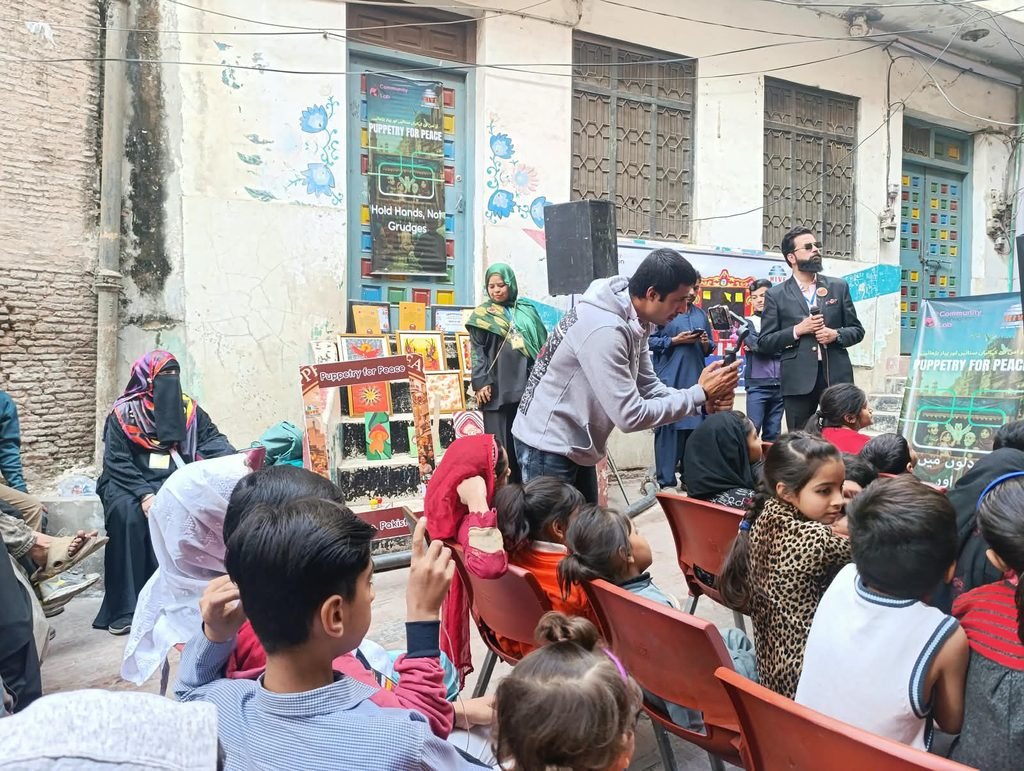
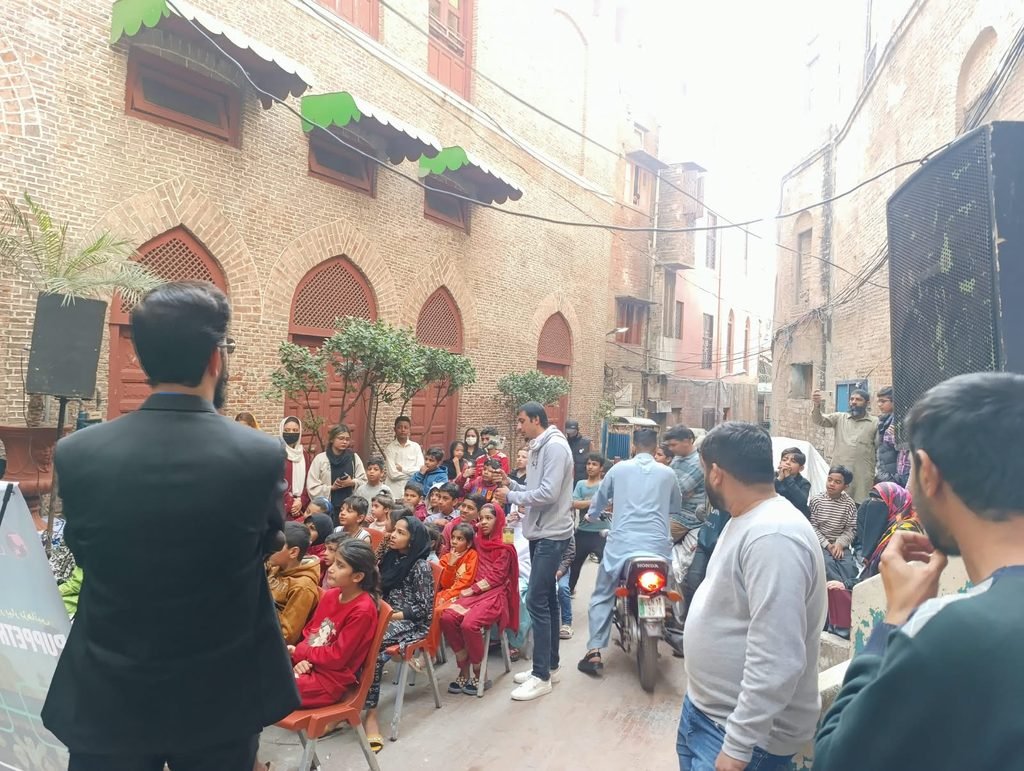
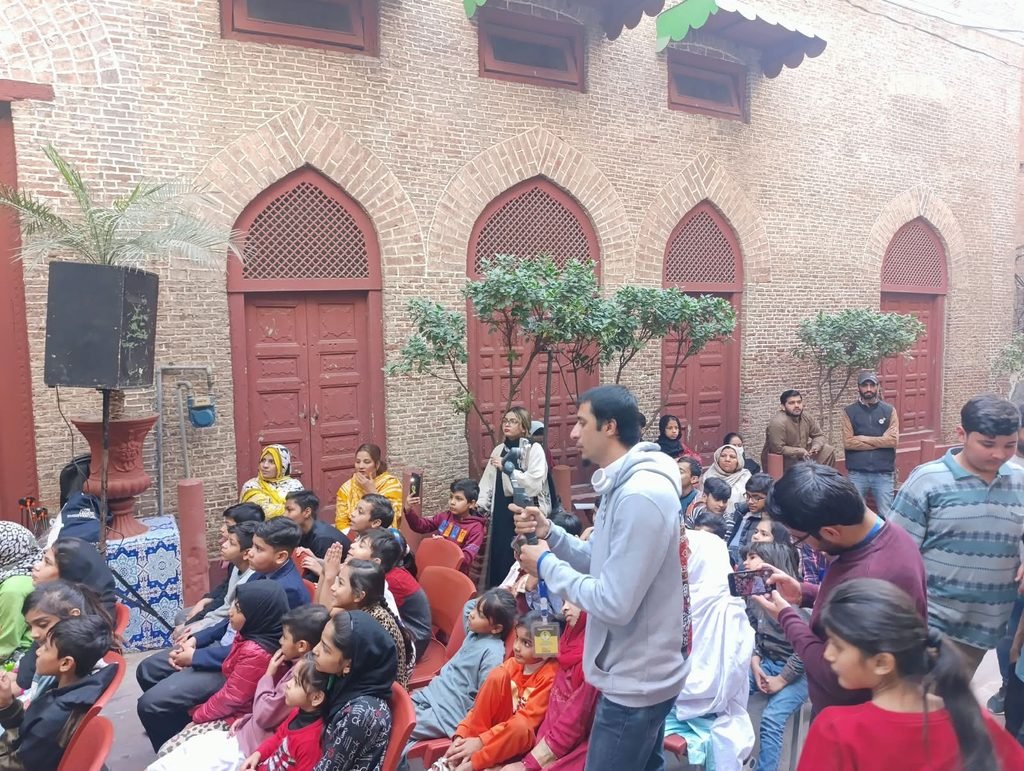
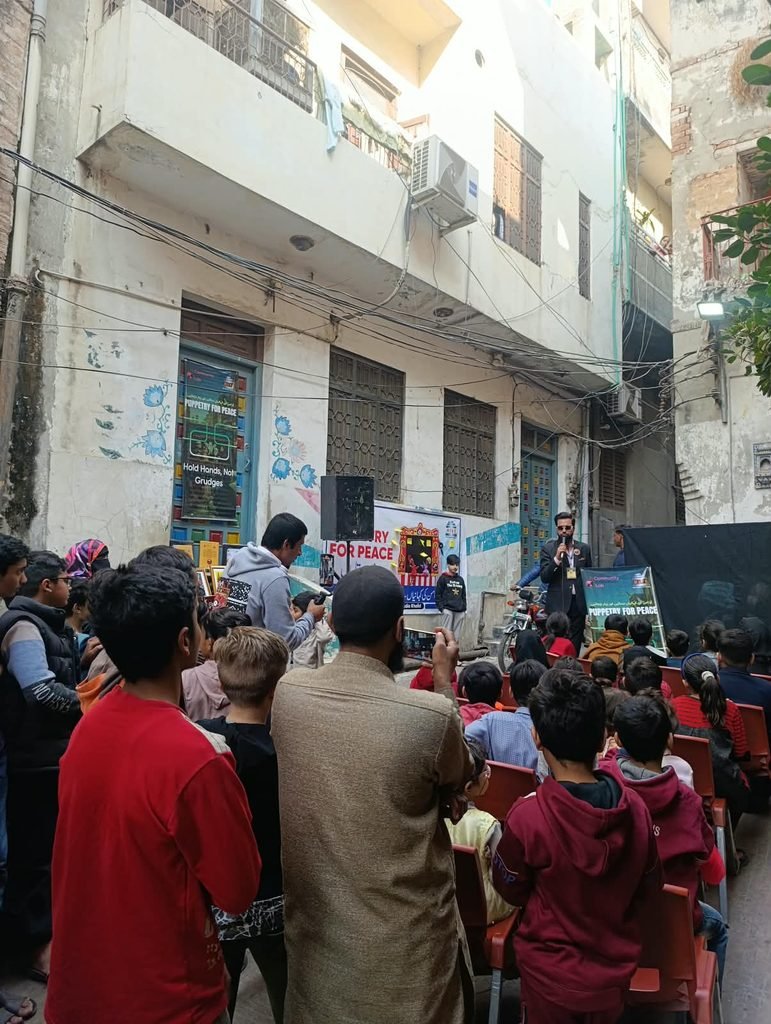
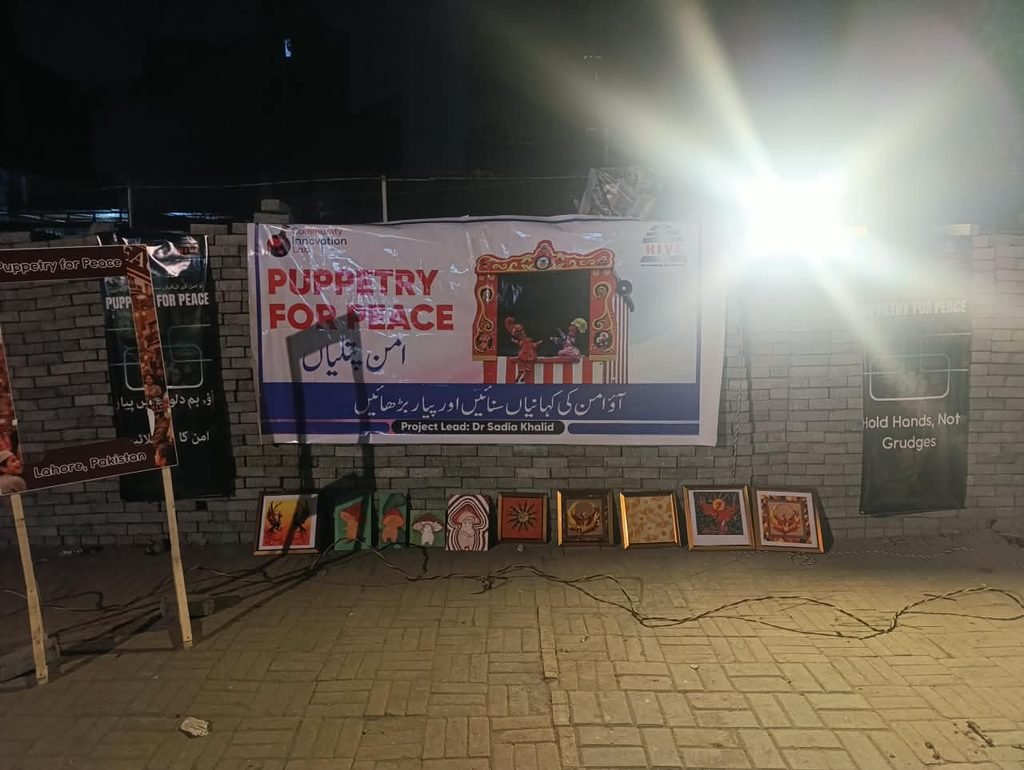
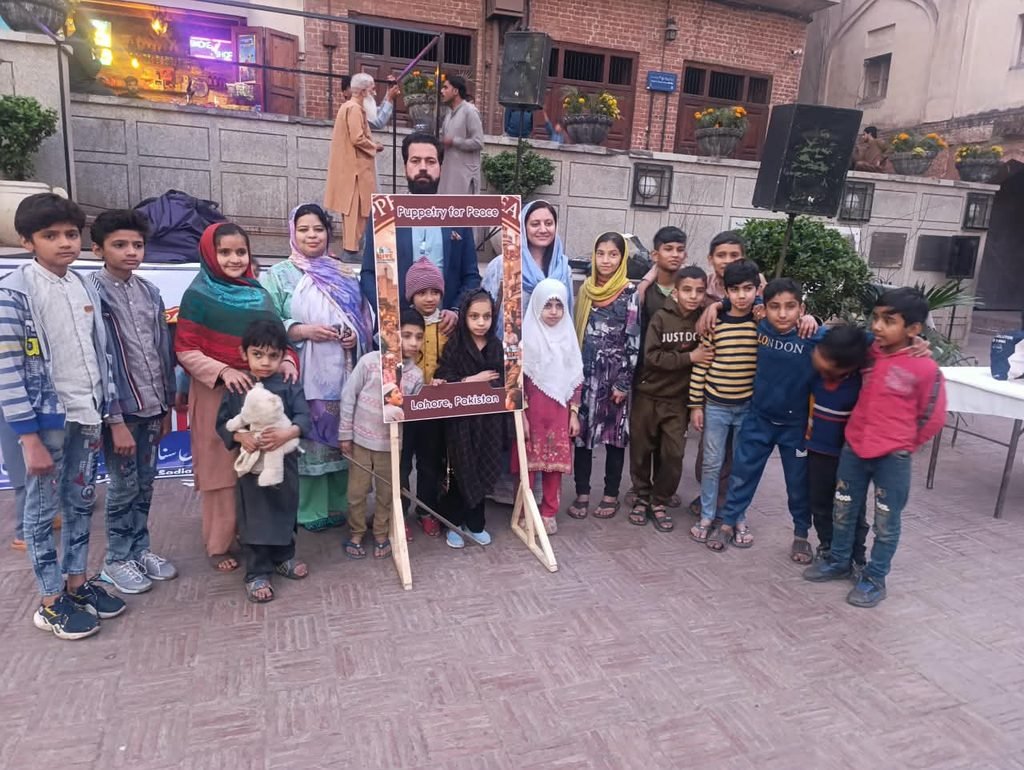
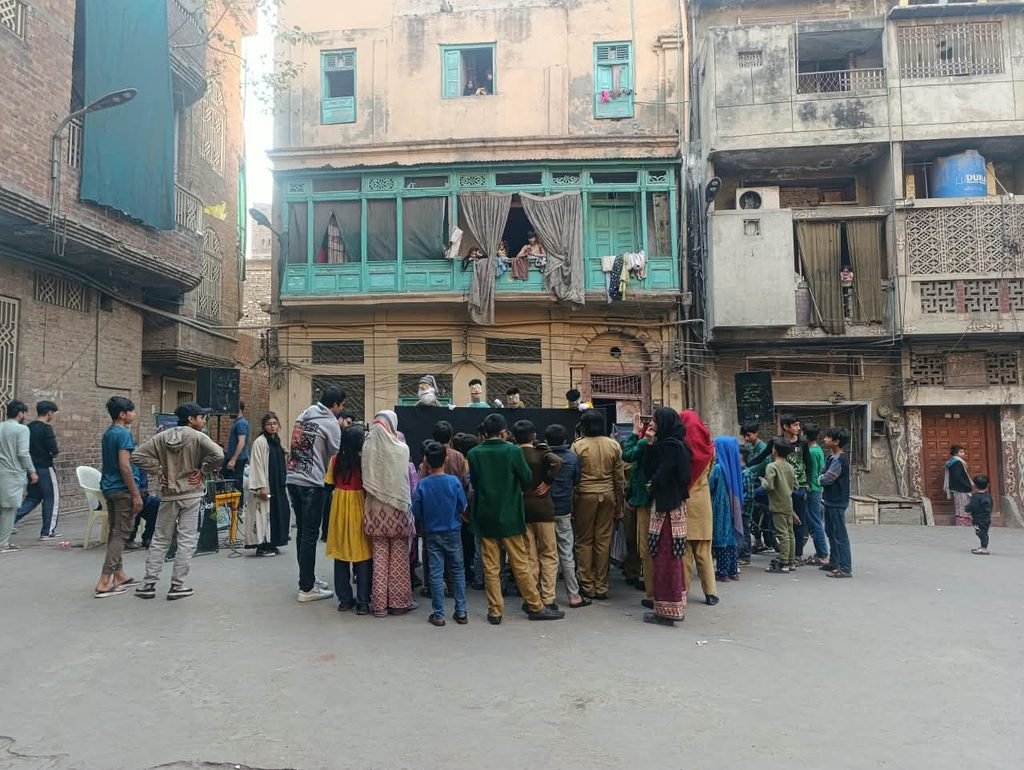
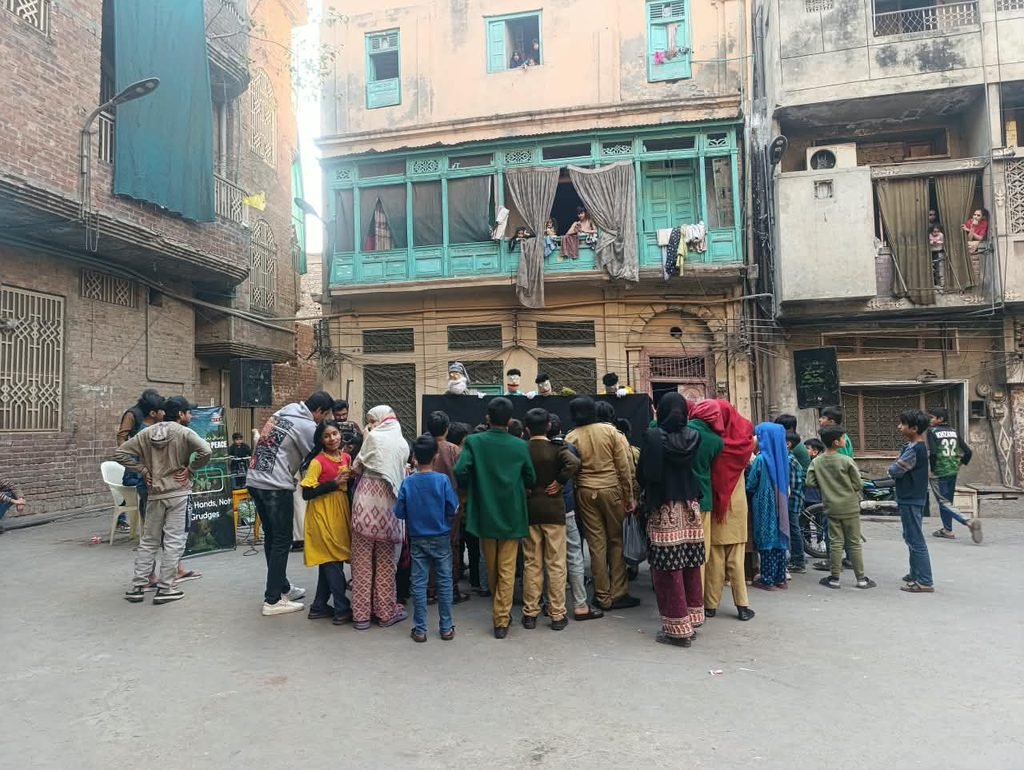
The performances were held on the weekend of 14 and 15 February 2026 in five gate communities, chosen with WCLA. Timings were planned around prayer times to respect local culture.
| Date | Location | Engagement highlights |
|---|---|---|
| 14 Feb | Delhi Gate (Wazir Khan Mosque courtyard) | Mixed audience of families, visitors and children in a busy pre-Ramadan market; discussion on conflict, a pledge to avoid anger, and messages on inclusion and women’s empowerment |
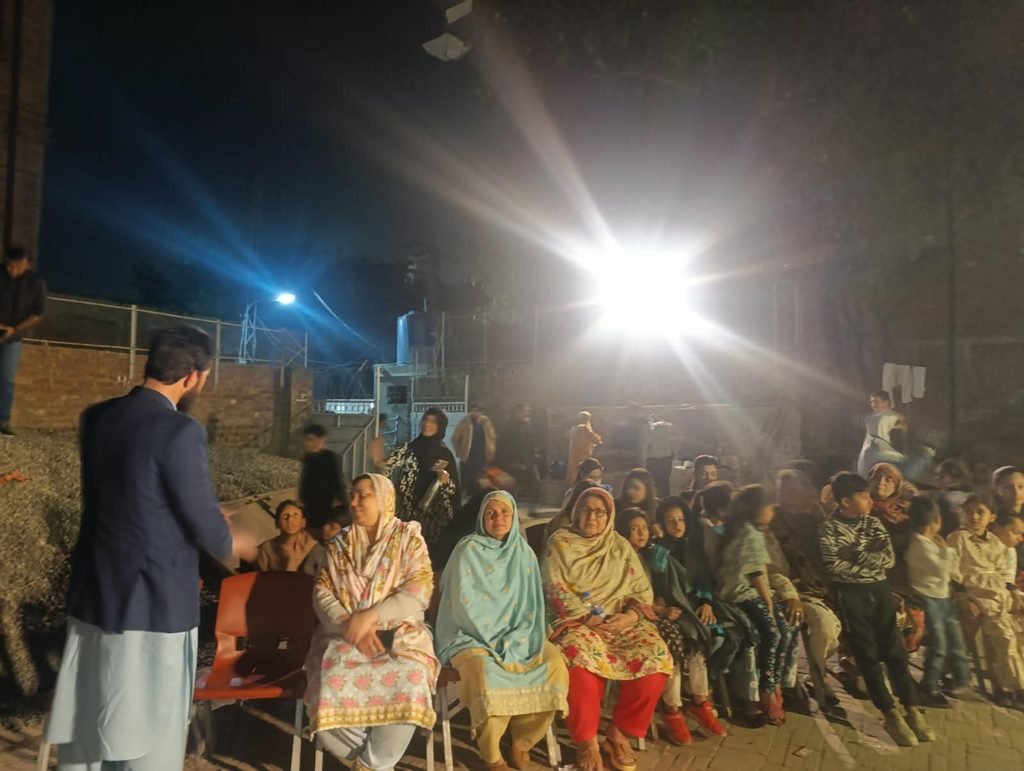
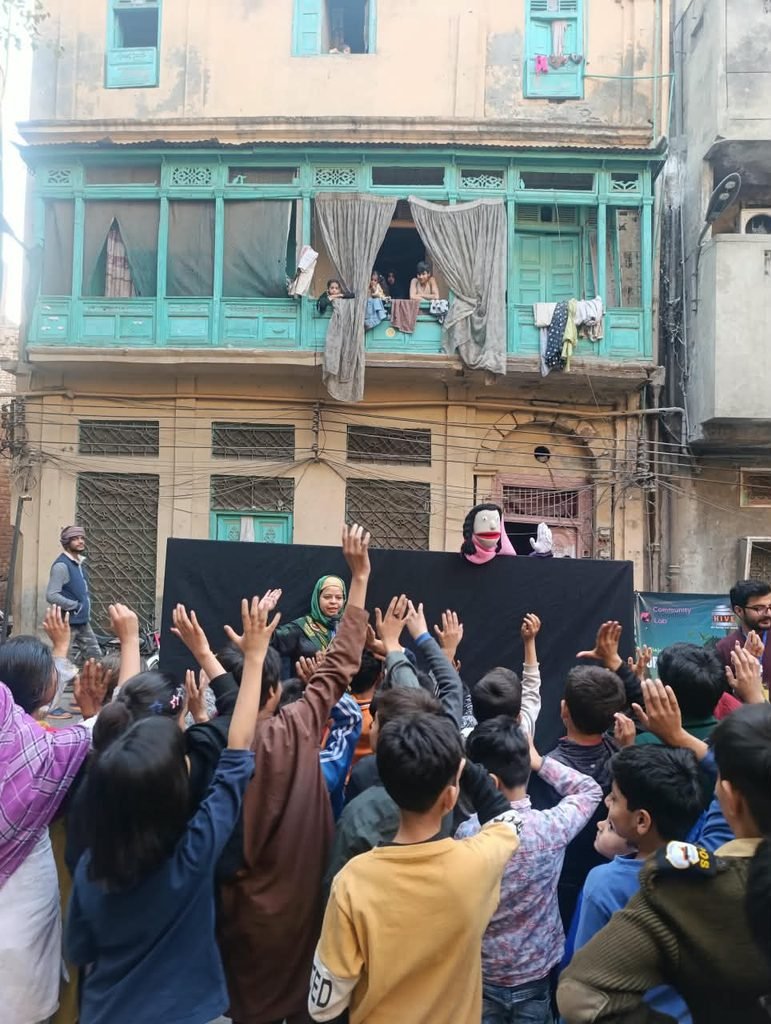
| 14 Feb | Zaki Gate | Residential community; strong participation of women and grandmothers; children took environmental pledges; elderly viewers shared childhood memories of puppeteers |
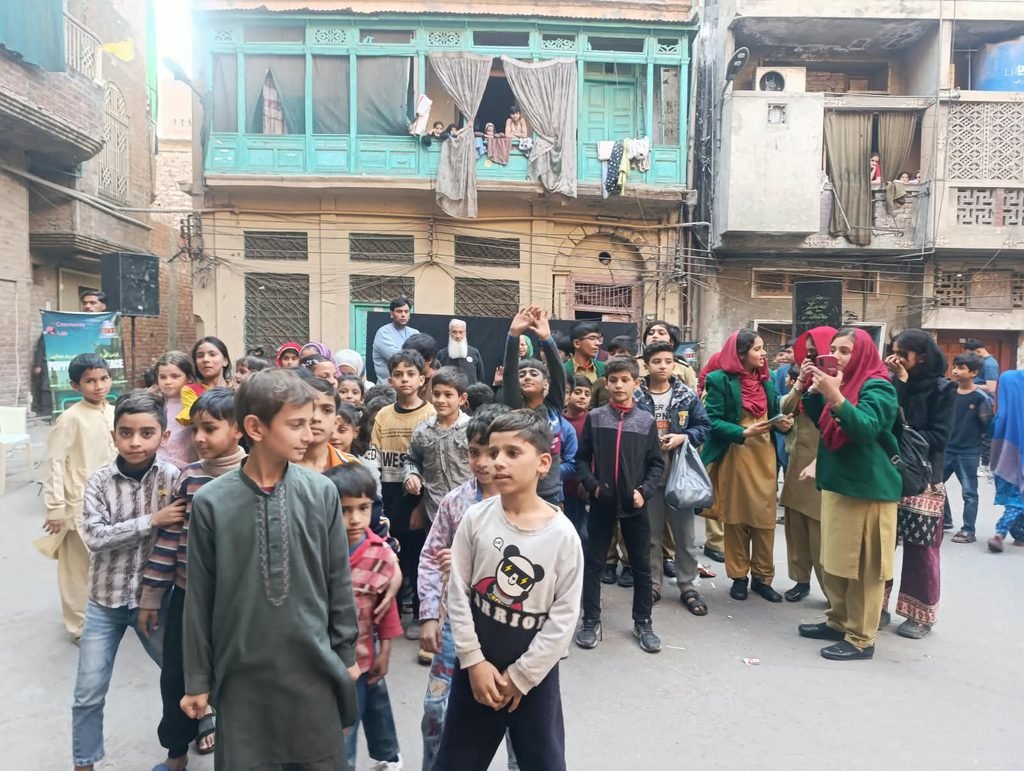
| 15 Feb | Bhati Gate | Moved to a shaded street near a heritage haveli after the first spot proved too sunny; children and elders joined; face painting and peace ribbons |
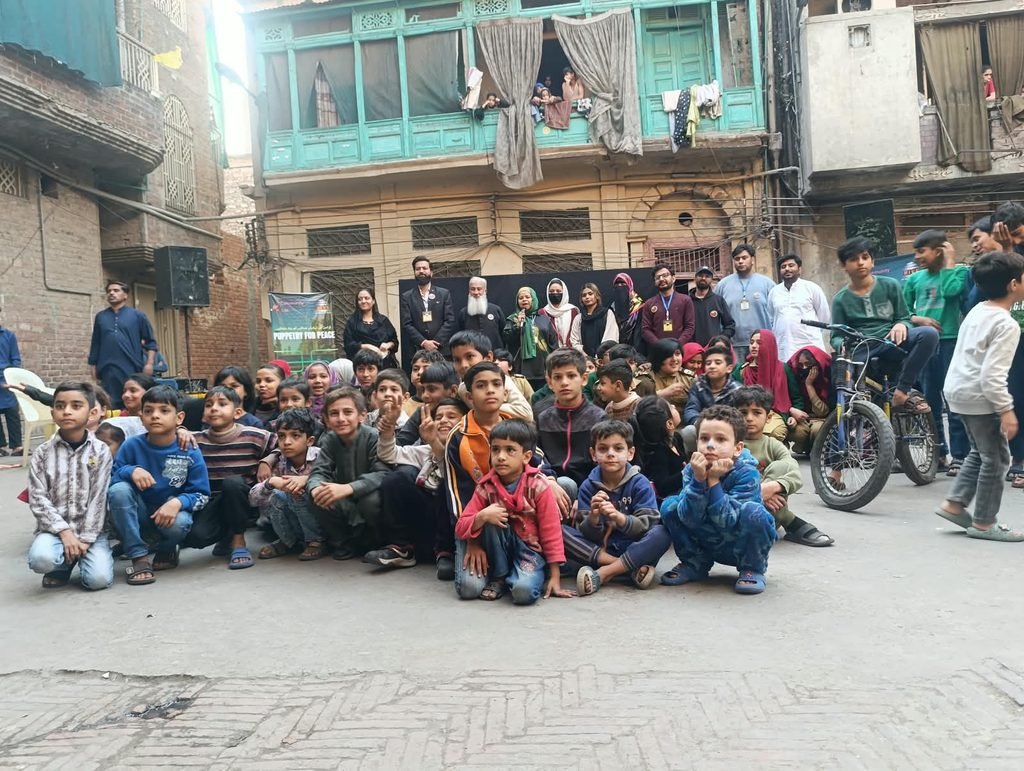
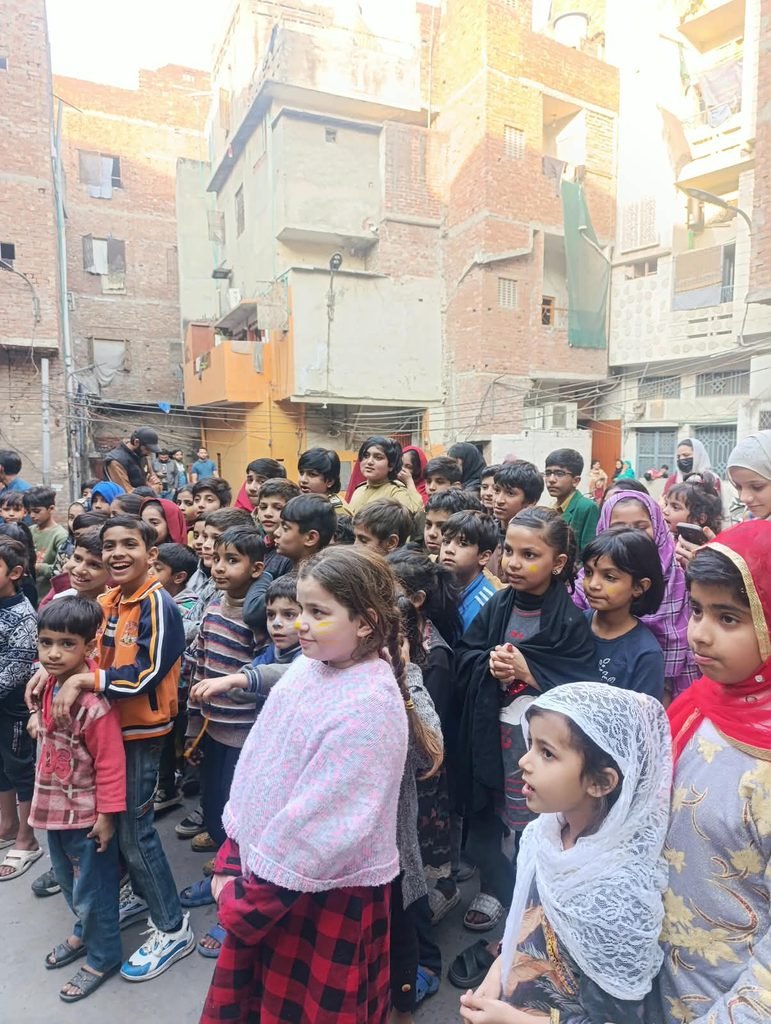
| 15 Feb | Lohari Gate | Large gathering of children and teenagers in a residential square; children volunteered to carry equipment and promised to improve their behaviour |
| 15 Feb | Mori Gate | Closing performance after Maghrib with families and a local karate youth group; closing ceremony with shields for partners and certificates for team members |
Learning Outcomes
The project worked as a practical learning programme for the student team, and as a learning experience for the children who watched.
For the student team
| Area | What the team learned |
|---|---|
| Puppet craft | Shaping foam faces and bodies, fitting eyes, hair and hands, making glove-style hands, and stitching costumes suited for hand performance |
| Voice and performance | Voice modulation for different characters, working with accents, retakes and listening back to improve delivery |
| Live puppetry | Controlling a puppet with one hand, synchronising movement with recorded dialogue, and the physical stamina this needs |
| Storytelling and scripting | Turning social issues into a simple, engaging story with clear characters and messages |
| Project management | Task delegation, checklists, scheduling around exams, logistics in narrow streets and coordinating with local authorities |
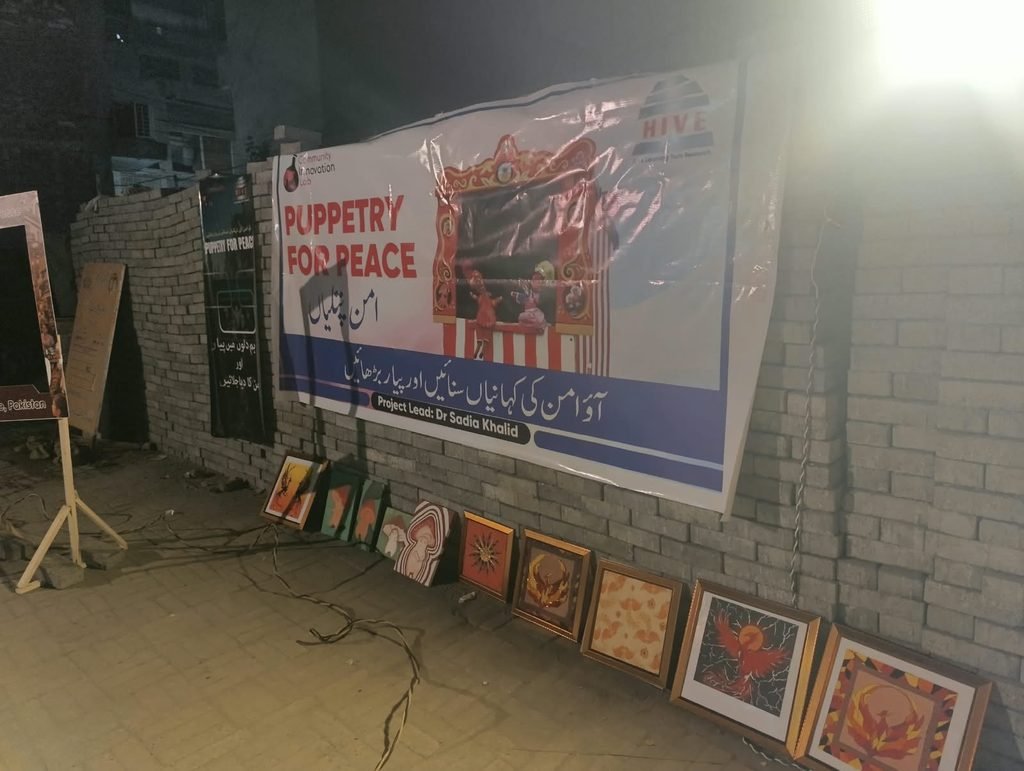
| Communication and branding | Designing a logo, standees, banner, badges and social media content in a consistent visual theme |
| Community engagement | Managing excited crowds, respecting local customs and prayer timings, and collecting feedback |
| Teamwork and resilience | Working long hours, solving problems on the day and staying motivated with limited stipends |
For children and audiences
- Understanding that peace, tolerance and respect for all faiths are shared values
- Learning the history of their own gate and neighbourhood
- Understanding civic responsibility: avoiding littering and plastic waste, conserving water, switching off lights
- Seeing girls’ education and equality presented as everyone’s concern
- Experiencing a live puppet show and creative activities, often for the first time
Expected Outcomes
| Expected outcome | What was expected to change |
|---|---|
| Revival of puppetry | Renewed interest in Putli Tamasha among young people and communities, and a small group of new puppeteers |
| Peace and tolerance | Greater awareness of peace, diversity and non-violence among children and families |
| Youth capacity | Students gain practical creative, technical and leadership skills |
| Civic and climate awareness | Children make pledges and begin to link daily habits with responsibility |
| Community connection | Stronger trust between the team, WCLA and Old City communities |
| Reusable assets | A recorded drama, six puppets and a stage and branding kit that can be used again |
| Foundation for scale | Learning and documentation that support repeat visits and replication in other communities |
Targets Achieved
| Target | Result | Status |
|---|---|---|
| Form a student core team | Team of six students from Punjab University formed and trained | Achieved |
| Hold a puppetry workshop | Workshop held on 15 December 2025 with hands-on puppet-making and guest trainer session | Achieved |
| Write an original peace story | Story with six characters and a three-scene script completed | Achieved |
| Record the drama professionally | Recorded at a studio on 24 January 2026 with narration and music | Achieved |
| Make character puppets | Six puppets and costumes completed by the team | Achieved |
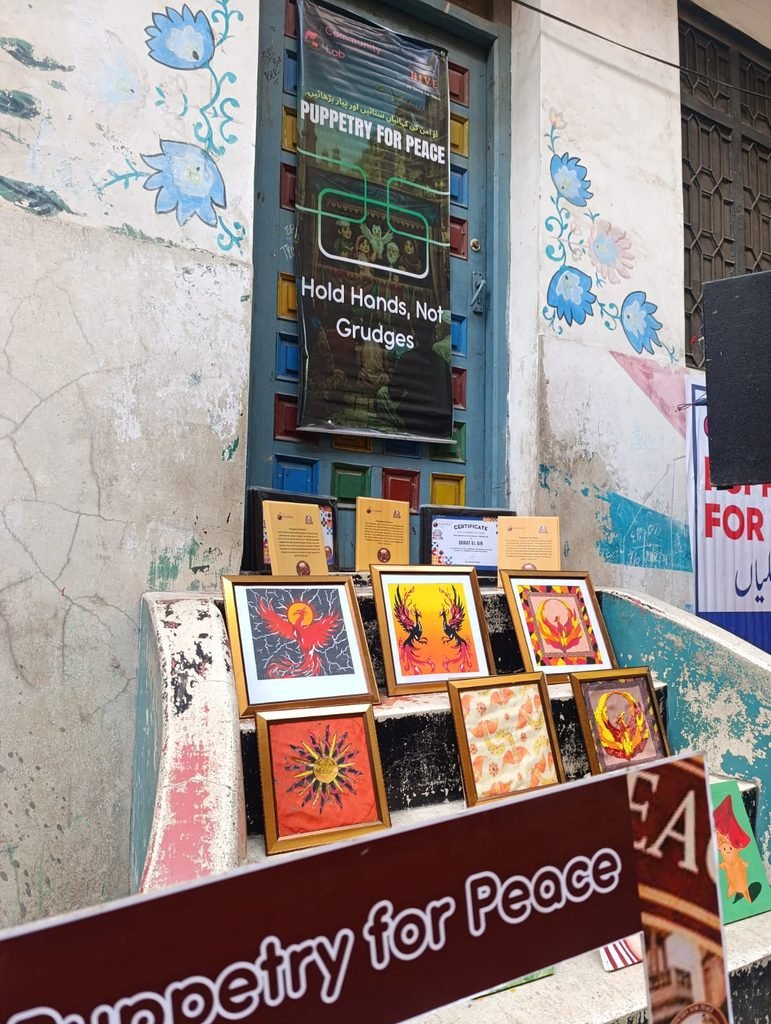
| Create branding materials | Logo, standees, banner, badges, ribbons, selfie booth and certificates | Achieved |
| Perform in the Old City | Four street performances planned; five delivered across five gates | Exceeded |
| Secure local partnership | WCLA approval, security and on-ground support obtained | Achieved |
| Collect community feedback | Feedback collected at every performance and from workshop participants | Achieved |
| Recognise team contributions | Certificates of appreciation and shields presented at the closing ceremony | Achieved |
Statistics
| Indicator | Figure |
|---|---|
| Project duration | About 12 weeks (30 Nov 2025 to 20 Feb 2026) |
| Community performances | 5 (Delhi, Zaki, Bhati, Lohari and Mori Gate) |
| Direct beneficiaries per show | Approximately 500 |
| Direct beneficiaries, all shows | Approximately 2,500 (5 shows) |
| Indirect beneficiaries | Approximately 1,000 |
| Social media engagement | 5,000 |
| Puppets and characters | 6 handmade puppets with costumes |
| Script | 1 original story in 3 scenes, in Urdu with regional accents |
| Workshop | 1 workshop (15 Dec 2025), open to 15 students; 8 attended |
| Trainers and mentors | 2 lead and guest trainers, 1 storytelling advisor, 1 sound editor |
| Total project budget | PKR 745,000 |
Approximate reach of Puppetry for Peace
Impact & Change Created
- Students gained new skills and took full ownership of a community project, from script to stage.
- Children experienced live puppet theatre, many for the first time, and made public pledges on non-violence, civic behaviour and environmental care.
- Communities responded warmly to messages on inclusion and women’s empowerment. Roshni became the audience’s favourite character across gates.
- Heritage was revived in its own setting: audiences asked when the shows would return, including after Eid.
Stories of Change
“It took us back to our childhood.” At Zaki Gate, two elderly women remembered puppeteers who once travelled neighbourhood to neighbourhood on bicycles. The show brought those memories back, and showed that the name Putli Tamasha still carries deep nostalgia.
Children who promised to change. At Lohari Gate, the puppet Roshni said she was sad because the children were not behaving well. The children, restless and dismissive at first, responded emotionally and promised to control their anger and behave better.
“Is there a ticket?” Visitors at Delhi Gate asked if the show was ticketed. It showed how rare live traditional performance has become, and that people value it and would support it.
Children explaining to children. At Mori Gate, karate group members brought other children from the neighbourhood, and those who had already seen a show explained the idea to newcomers. When the team announced the end of the two-day programme, many children asked them to return.
Challenges & How We Addressed Them
| Challenge | Response |
|---|---|
| Very few artisans and trainers left; doubts about students’ ability to learn the craft | Connected with master trainer Naveed Ahmed and guest trainers; a team member with puppet-making experience led construction |
| Exams, winter break and trainer unavailability delayed script and rehearsals | Held more meetings than planned; motivated students through skill-building and ownership |
| Team new to voice acting and puppeteering | Recorded the script in a studio; repeated rehearsals; a full rehearsal with puppets |
| Heavy puppet heads caused shoulder strain | Dedicated rehearsal day; shared puppeteering across four performers |
| Narrow streets, heavy pre-Ramadan traffic and weak mobile signals | Used a loader, alternate routes and WCLA guidance; compact stage and portable setup |
| Harsh sun and unsuitable venue at Bhati Gate | Moved to a nearby street with residents’ permission |
| Crowd management with excited children | WCLA staff and volunteers organised audiences; short, interactive show |
| Limited stipends for the student team | Emphasised skill-building, certificates and recognition; team showed strong commitment |
Lessons learned
- One-time visits are not enough; lasting change needs repeat visits and trust-building.
- Respected elders and local groups, such as the karate club at Mori Gate, greatly improve discipline and participation.
- Recorded audio reduces performance pressure for new performers.
- Work with parents and schools, not only children, so that lessons are reinforced at home.
Innovation & Uniqueness
- Uses a nearly forgotten Pakistani art form as a modern tool for peacebuilding and civic education.
- Brings art to the community instead of asking the community to come to an art venue, in the historic setting of the Walled City.
- Uses puppets to speak on sensitive topics such as religious discrimination and girls’ education in a way both children and elders accept.
- Youth-led from concept to performance: script, puppets, costumes, branding and performance were all produced by the team.
- Inclusive by design: characters from different faiths and regions, and regional accents in the voices.
Sustainability & Future Scope
The recorded drama, six puppets, stage and branding kit are reusable assets that can travel to schools, other Old City gates and other cities. The trained students form a core team that can keep performing and train others.
The project team recommends the following for future phases:
- Repeat visits and follow-up sessions in the same communities, with schools and community spaces together
- Themes: civic and social responsibility, hygiene and sanitation, climate education, respectful communication, and consent and personal safety for children
- Involvement of parents and respected community elders
- Support for positive youth platforms, financial literacy and livelihood skills for young people
- Revival of puppet-making as a livelihood, with more trainers and apprentices
- Scaling to more communities, especially underserved areas
Monitoring, Documentation & Learning
Progress was recorded through detailed narrative reports at each stage (team building, workshop, puppet-making, recording, rehearsals and each performance day), a live activity timeline, expense records with receipts, participant and audience feedback, and photo and video documentation of all events. Content was also shared on social media to extend reach and visibility.
Project Team & Roles
| Team member | Role |
|---|---|
| Dr. Sadia Khalid | Project lead: concept, planning, partnerships and coordination |
| Naveed Ahmed | Master puppet trainer (30+ years); puppeteer |
| Seema Lakheani (Khed Kahani) | Guest trainer: storytelling, Urdu poetry and puppetry |
| Waqas Manzoor (Deep Nau) | Storytelling advisor |
| Haseeb, Qurat-ul-Ain | Puppet design and making; costumes |
| Khawaja Danyal | Branding, communication design and strategy |
| Qasim, Taimur, Ehtisham | Voice artists and puppeteers |
| Adnan, Tariq | Photography and videography |
| Arshad Ahmed | Sound editing |
| WCLA Community & Advocacy team | Permissions, security and on-ground coordination |
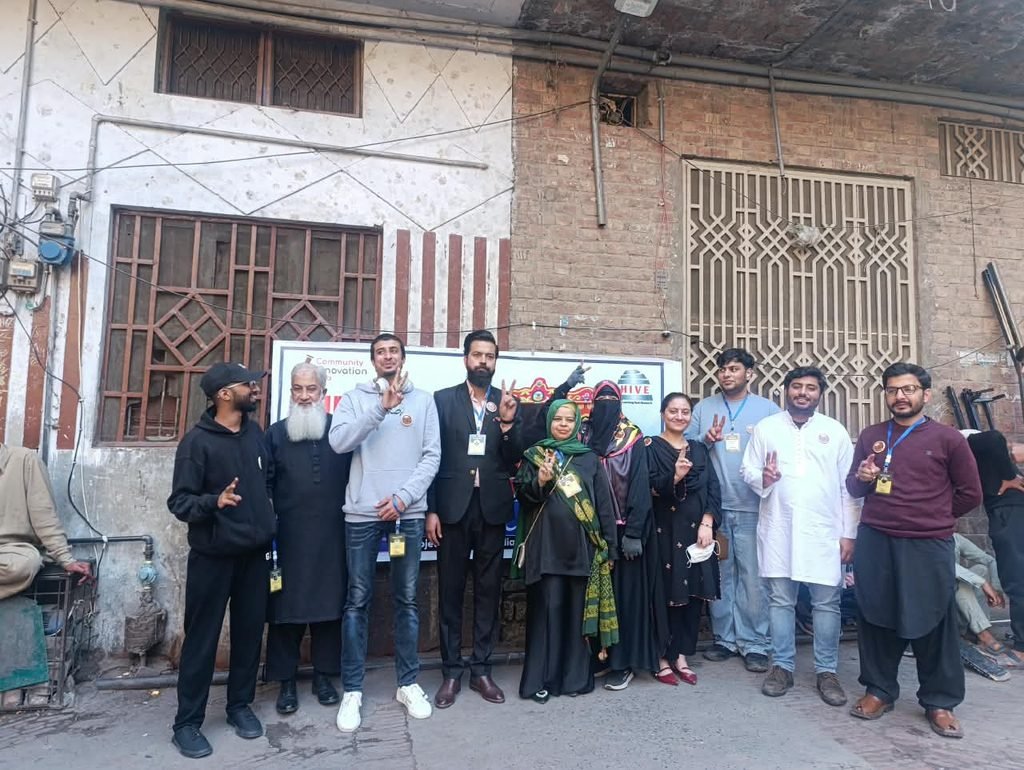
Photo Gallery
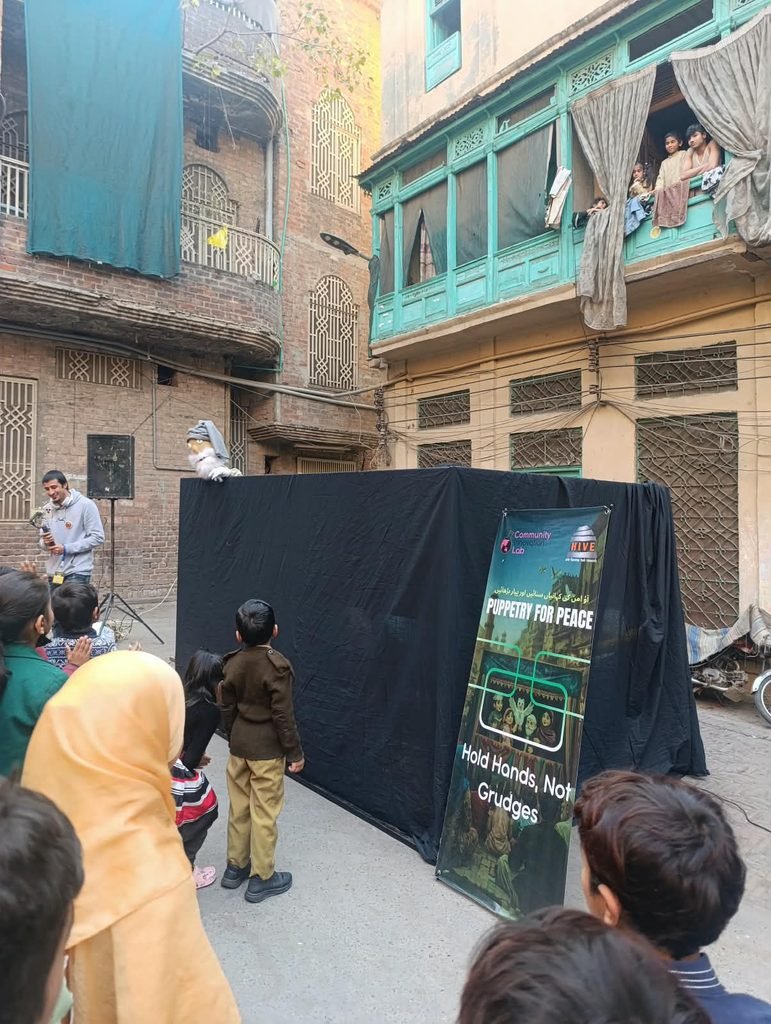
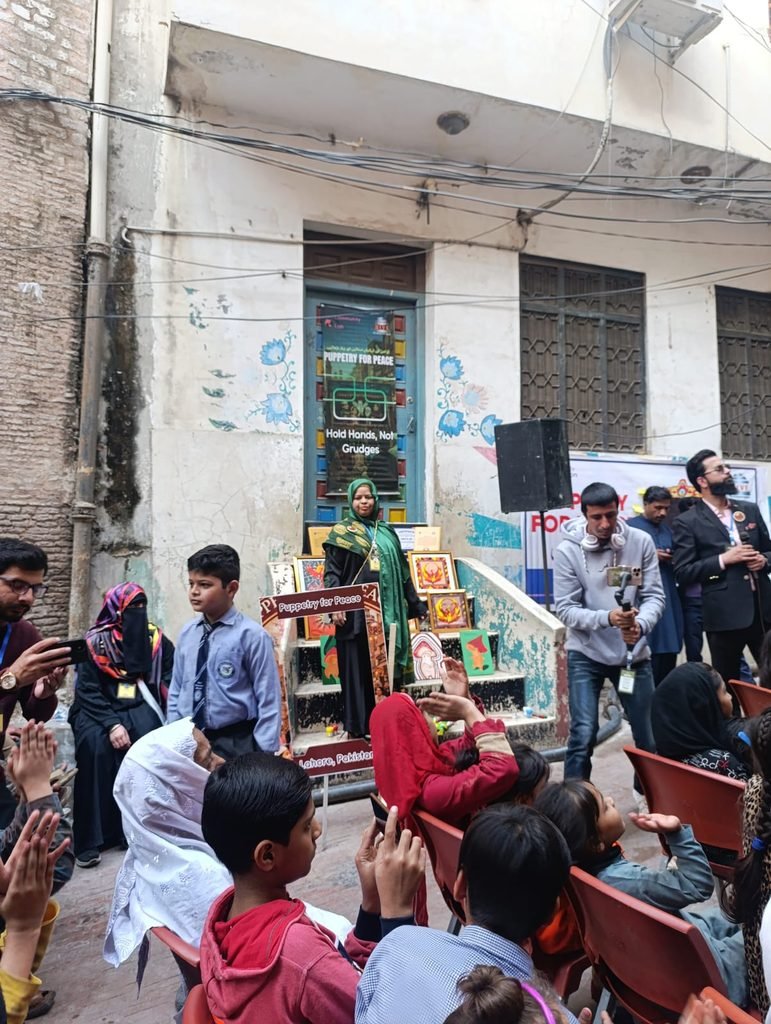
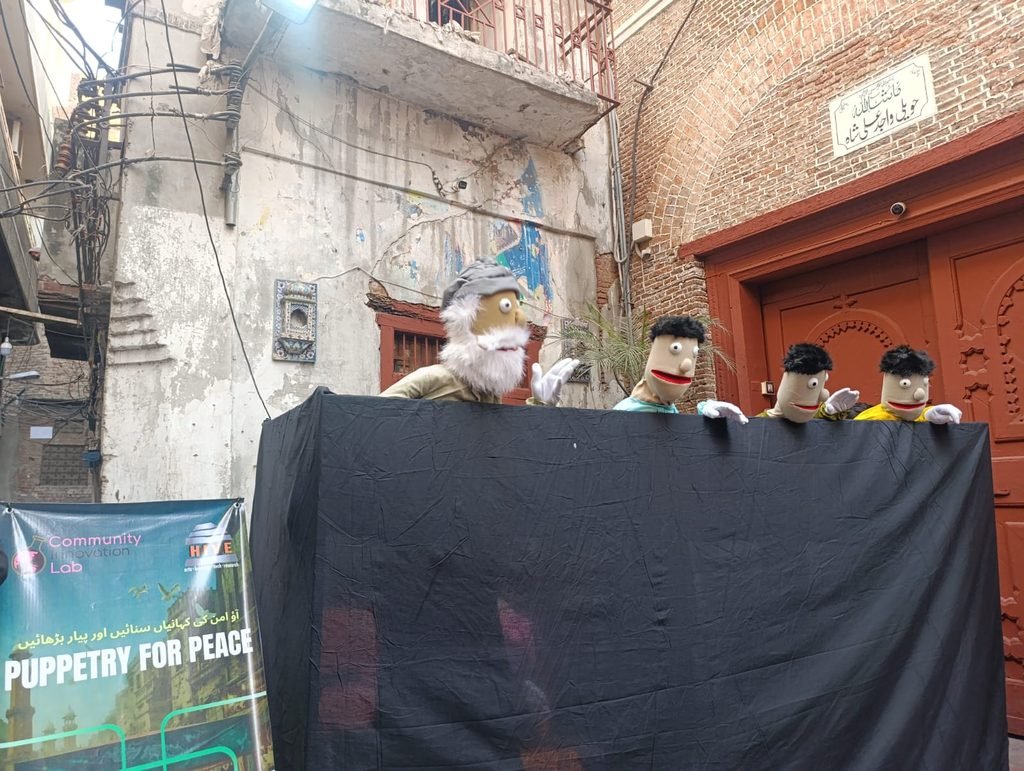
Conclusion
In about three months, Puppetry for Peace turned a fading tradition into a living peacebuilding tool. A small student team, with limited stipends and strong commitment, brought puppet theatre to five historic communities, where children and elders heard messages of peace, respect and responsibility. The project shows that heritage arts can carry powerful social messages, and that young people can lead that change. It is ready to grow into a longer programme reaching more communities and schools.